Projector acuity systems are familiar and have served eye care for decades. But when you put the real numbers side by side — hardware, consumables, time, and clinical capability — a software-based digital eye chart wins on every axis. Here is what the math actually shows over a five-year practice horizon.
The hardware and consumable costs
A projector chart system carries an upfront unit cost plus ongoing bulb replacements. Projector bulbs are not cheap and they dim over time, which quietly degrades contrast and therefore measurement accuracy long before the bulb fails outright. A digital system runs on a monitor you likely already own, with no consumables.
| Over 5 years, per lane | Projector system | Digital software (Cloud) |
|---|---|---|
| Hardware / unit | $1,500–$2,500 | Existing monitor |
| Bulb replacements | $300–$600+ | $0 |
| Software (5 yrs @ $249/yr) | — | ~$1,245 |
| Chart types included | Snellen only | All chart types |
Even before counting capability, the five-year totals land in a similar range — but one of them buys a single chart type and the other buys the entire testing suite plus updates.
The hidden time cost
Projectors warm up, and switching between the limited charts they offer is slow. Across a busy clinic that runs dozens of patients a day, seconds of fumbling per encounter add up to real chair time. Digital systems present any chart instantly and can randomize letters between patients to prevent memorization, which a fixed projector slide cannot do.
The capability gap
This is where the comparison stops being close. A projector gives you Snellen acuity. A calibrated digital system gives you:
- Snellen and ETDRS/logMAR
- Color vision screening
- Contrast sensitivity
- Worth 4-Dot and fixation disparity
- Pediatric optotypes (Lea, HOTV, Tumbling E, Landolt C)
- Astigmatic dial, crowding bars, mirror mode, and randomized presentation
To match that with hardware, you would buy several separate instruments. The software consolidates them onto the screen already in your lane.
The bottom line: for a similar five-year spend, a projector buys one aging chart type while digital software buys the full clinical suite, eliminates bulbs and warm-up, and keeps improving through updates. The math favors digital before you even weigh the clinical advantages.
Making the switch
AcuityMaster Cloud runs on the Mac or Windows computer already in your exam lane — no projector, no bulbs, no proprietary hardware. A 15-day free trial lets you measure the difference in your own clinic before you commit.
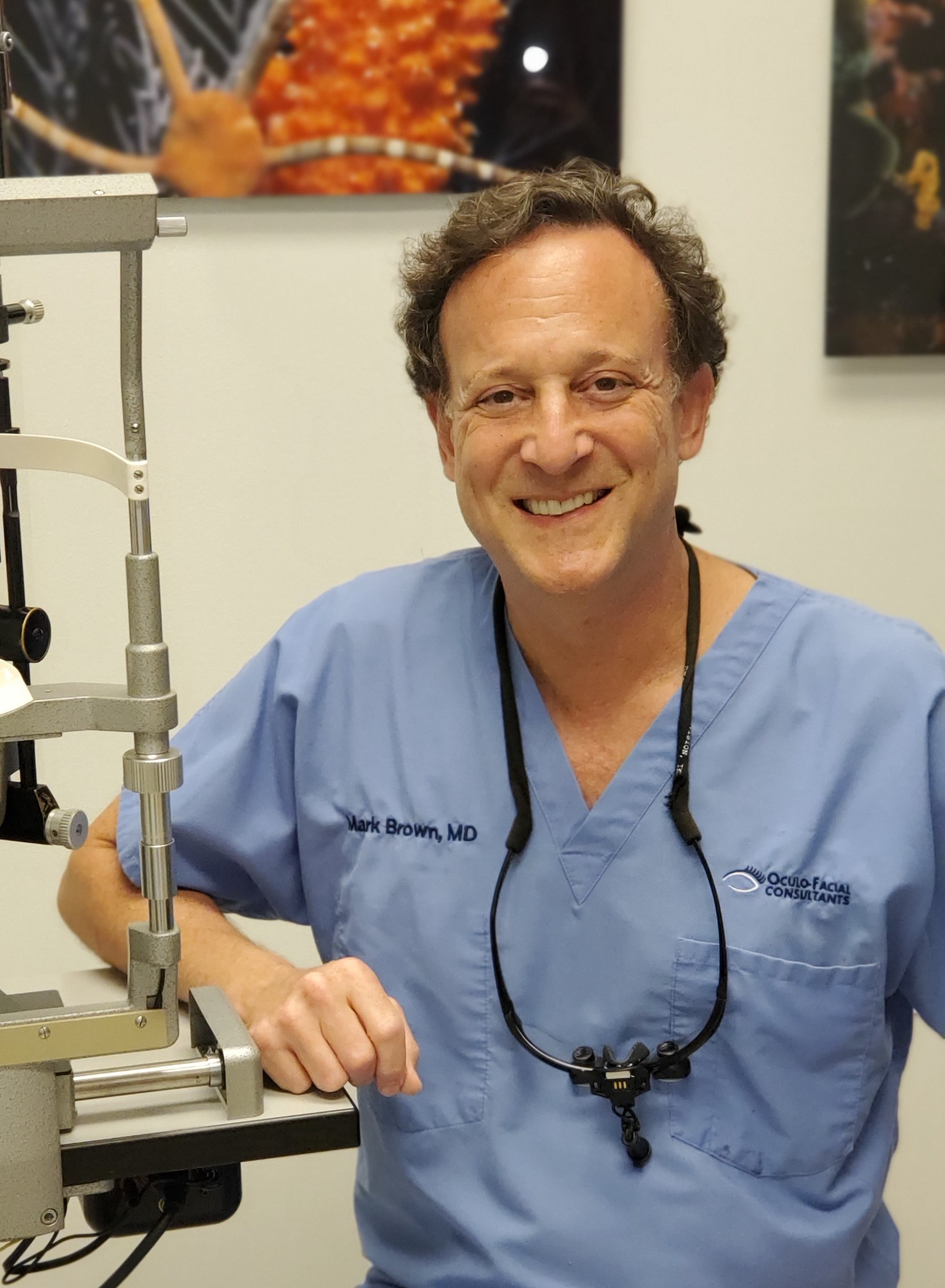
Mark S. Brown, MD
Oculoplastic surgeon at Oculo-Facial Consultants and founder of AcuityMaster. In clinical practice since 1998, Dr. Brown built AcuityMaster to bring standards-compliant acuity testing to every exam lane.